 Message
 中文
 English


News


News
Waterproof Connectors for Industrial Control Panels
Release time:2026-11-26
viewed:9
Industrial automation systems rely on dependable electrical connections between control cabinets, sensors, actuators, motors, and other equipment. As machines become more integrated and production lines become increasingly automated, connector selection plays an important role in equipment design and maintenance.
Waterproof connectors may be used in industrial control panel applications where external electrical connections need to accommodate moisture, dust, or other environmental conditions. They can provide practical connection options for equipment installed outside a cabinet or in locations exposed to the surrounding operating environment.
However, not every connection inside an industrial control cabinet requires a waterproof connector. The correct product depends on its installation position, electrical function, cable requirements, and environmental exposure.
YCZXF explores how waterproof connectors fit into industrial automation systems and what engineers and purchasing teams should consider when specifying them.
An industrial control panel contains electrical components that manage machinery and production processes. These may include controllers, power supplies, relays, terminal blocks, communication devices, and protective components.
Waterproof connectors are often more relevant to external connections between the control panel and field equipment.
Industrial sensors monitor conditions such as position, proximity, temperature, and pressure.
Depending on the equipment design, connectors may be used to link sensors with control systems. In areas exposed to moisture or dust, an appropriately specified connector may be considered.
Actuators, solenoid valves, and other electrically controlled devices require connections to the control system.
Connector selection should account for the electrical requirements, contact arrangement, cable construction, and installation environment.
Some industrial equipment uses external connectors to connect motors, auxiliary devices, or machine assemblies.
The required connector depends on the motor's electrical specifications, operating conditions, and the manufacturer's connection design.
A control cabinet may have cables running to equipment located outside the enclosure.
These connection points may require suitable cable-entry or connector arrangements based on the cabinet design and surrounding environment.
The connector should be evaluated as part of the complete electrical installation rather than as an isolated component.
Industrial automation systems often include multiple electrical interfaces. Using connectors with suitable specifications helps engineers organize wiring, simplify equipment assembly, and plan maintenance.
Several considerations are particularly important.
Connectors should match the circuit's voltage, current, contact arrangement, and wiring requirements.
Selecting a connector based only on its physical dimensions may result in an unsuitable electrical interface.
Predefined connector interfaces can help organize wiring between separate equipment modules.
This can be useful when machines are assembled in sections or when external devices need to be connected during installation.
Certain equipment designs benefit from detachable electrical connections. A suitable connector arrangement may simplify the process of disconnecting and replacing compatible components.
However, the connector must be selected according to the intended number of mating cycles and the manufacturer's specifications.
Connections outside the control cabinet may encounter moisture, dust, temperature changes, vibration, or other environmental conditions.
The required environmental protection should be determined for each installation point.
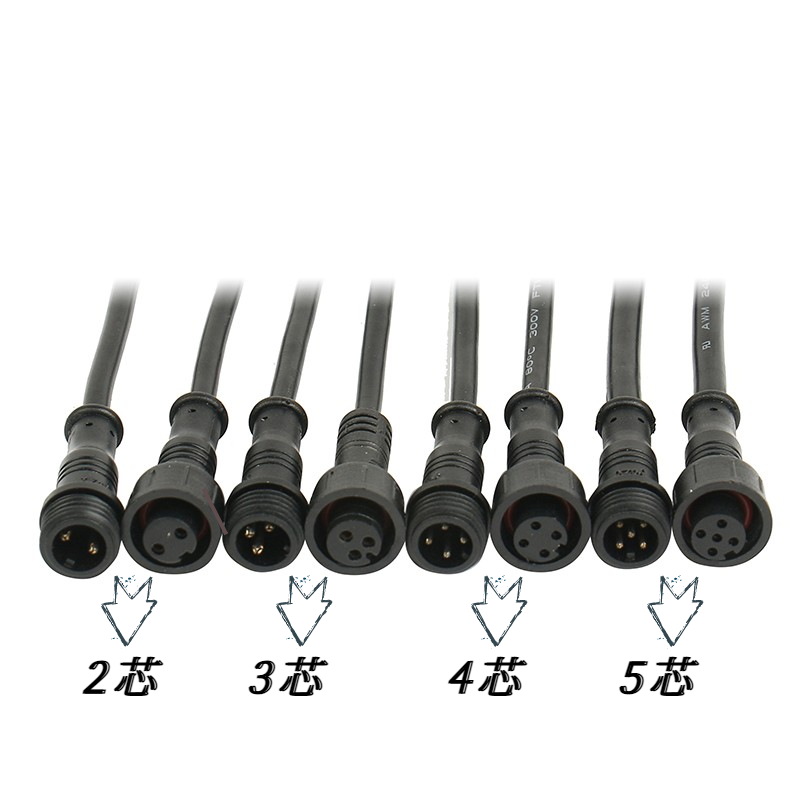
Different connector structures serve different equipment requirements.
<AsyncImage query="industrial circular waterproof electrical connectors male female cable assemblies" aspectRatio="16:9" width="100%"/>
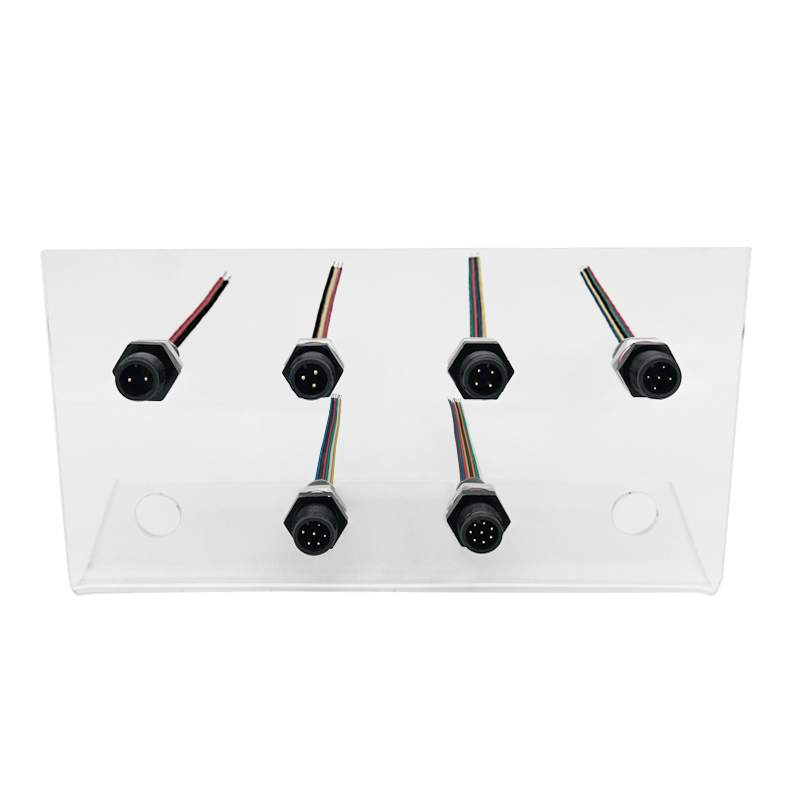
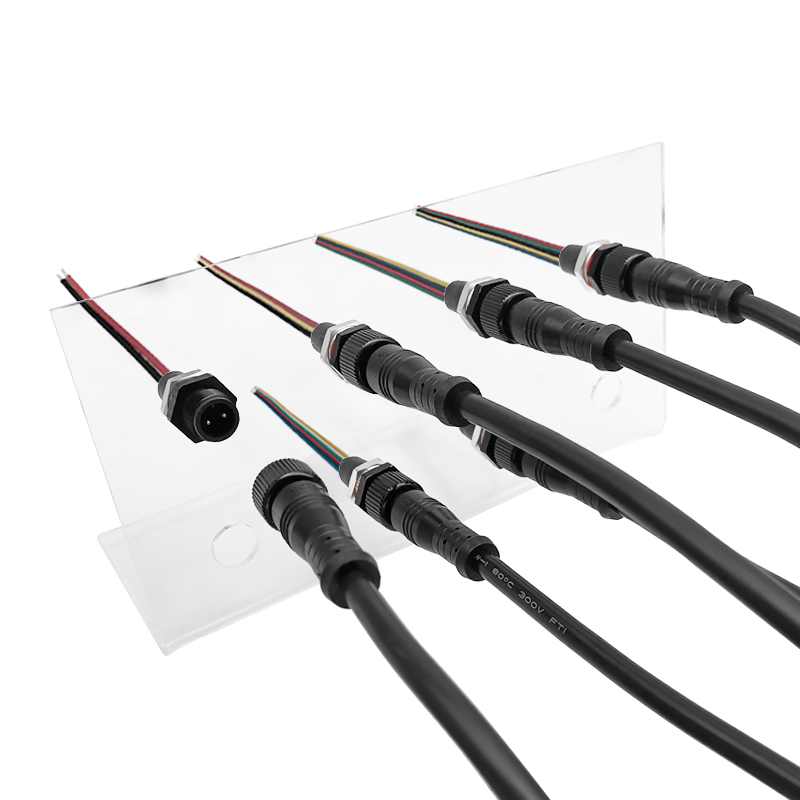
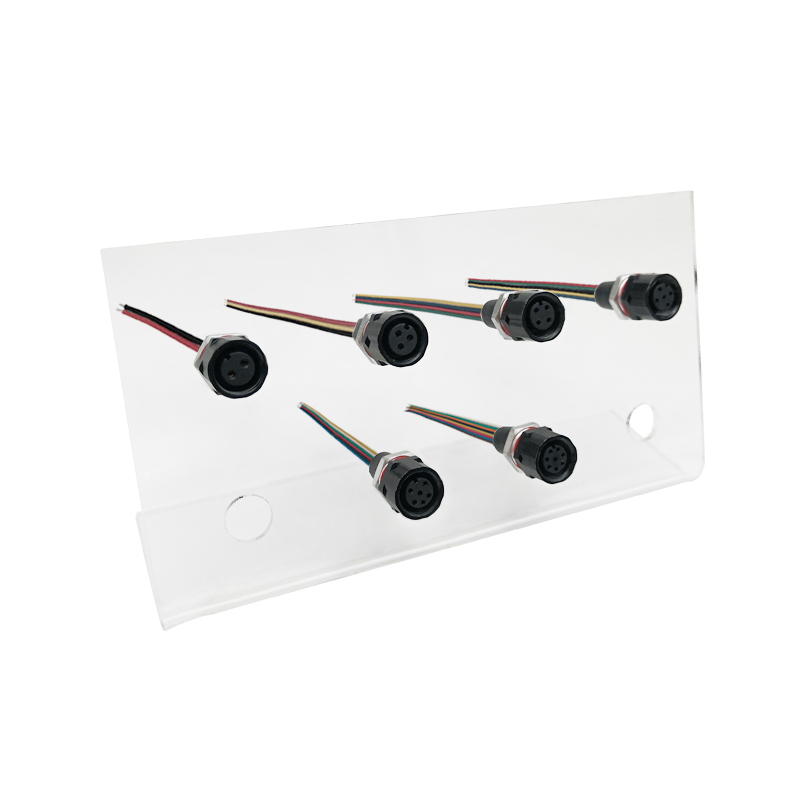
Circular connectors are commonly considered for industrial equipment interfaces because their form factor can support different contact configurations and locking structures.
Depending on the product series, they may be used for sensors, control equipment, or other electrical assemblies.
Before selection, confirm the contact arrangement, mating structure, cable specifications, and electrical ratings.
<AsyncImage query="M8 M12 industrial sensor circular connectors close up" aspectRatio="16:9" width="100%"/>
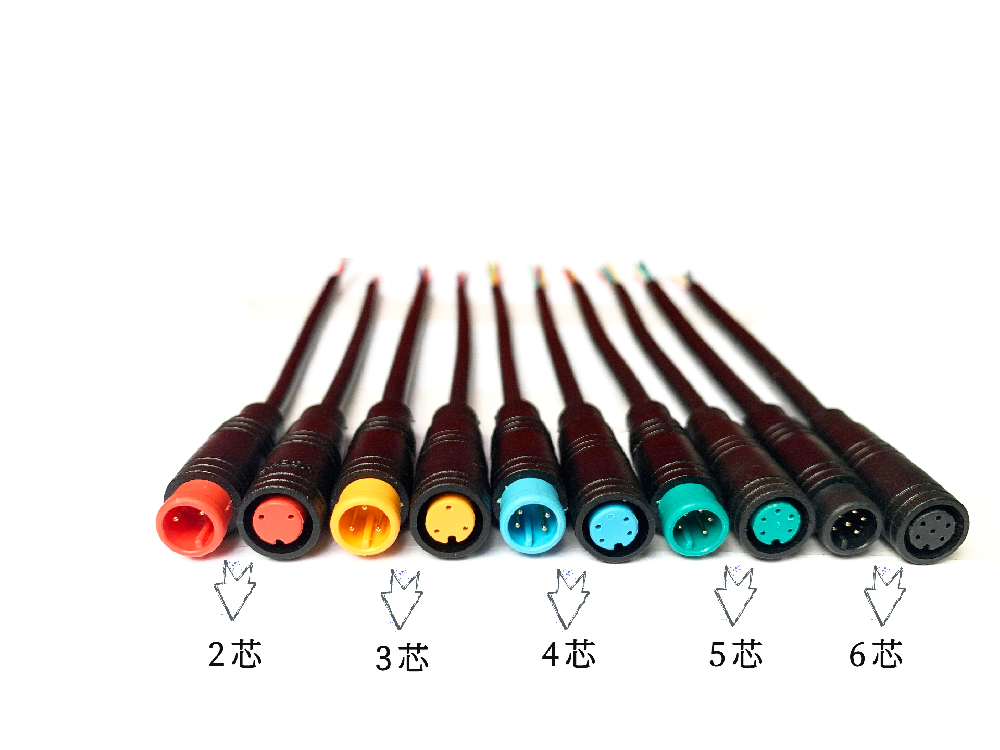
M-series connectors are widely encountered in industrial automation equipment.
Different sizes and configurations may be used for sensor and actuator connections. M8 and M12 are common examples, but the thread size alone does not establish complete compatibility.
Engineers should verify:
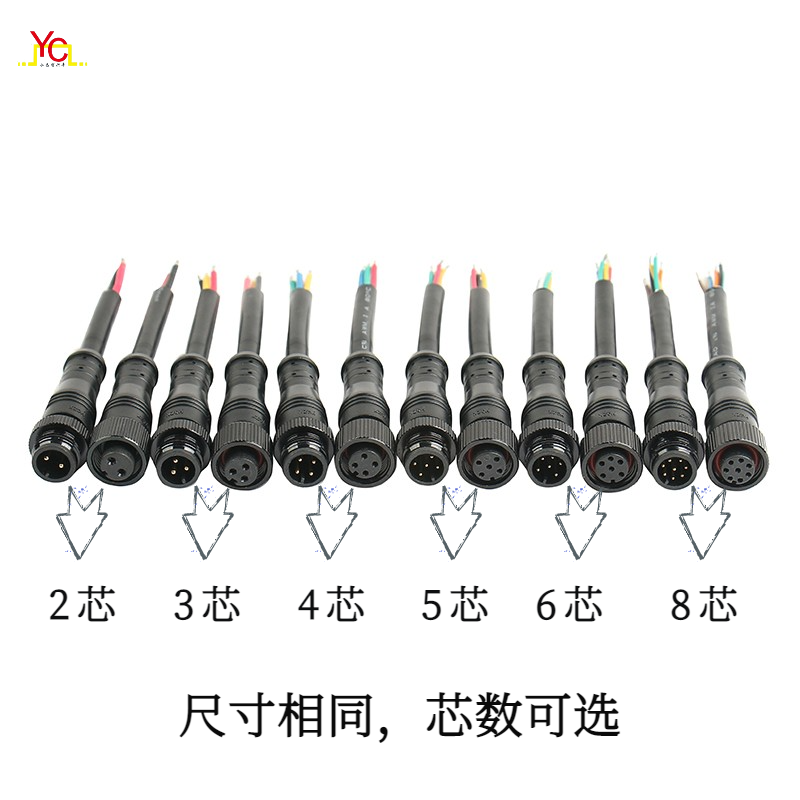
Pin count
Contact assignment
Coding
Male or female configuration
Rated voltage and current
Cable and mounting requirements
<AsyncImage query="industrial plastic waterproof cable connectors electrical" aspectRatio="16:9" width="100%"/>
Plastic connector housings may be considered when the application requires a particular combination of weight, structure, insulation, and installation characteristics.
The suitability of a specific material depends on its documented properties and the surrounding operating conditions.
<AsyncImage query="industrial metal circular waterproof electrical connectors" aspectRatio="16:9" width="100%"/>
Metal connector housings may be used in equipment designs that require a metal interface or a particular mechanical structure.
Buyers should review material specifications, mounting dimensions, corrosion-related requirements, and electrical characteristics for the exact model.
Connector placement should be considered during the electrical and mechanical design stages.
A practical design process includes the following steps.
First, distinguish between connections located entirely inside the control cabinet and those exposed to the surrounding environment.
Internal connections may use terminal blocks, internal wiring harnesses, or other connection methods. External interfaces may require connectors or suitable cable-entry arrangements.
Do not specify waterproof connectors automatically for every internal connection.
Power circuits and signal circuits can have different electrical and wiring requirements.
Identify the function of each connection and check whether separate connector configurations are needed.
Plan the cable path between the control panel and external devices.
Consider:
Cable entry direction
Available space
Bending radius
Cable support
Potential mechanical movement
Access for installation and maintenance
Avoid routing cables in a way that creates unnecessary pulling force or stress near the connector.
Connectors should be positioned where technicians can access them for assembly, inspection, and replacement.
Consider the space required for mating and unmating the connector, tightening locking components, and following the product's installation instructions.
Before selecting a connector for an automation project, review the following information.
| Specification | What to Verify |
|---|---|
| Rated voltage | Compatibility with the intended circuit |
| Rated current | Suitability for the connected load |
| Contact arrangement | Pin count and electrical assignment |
| Connector configuration | Male/female and mating structure |
| Cable specifications | Outer diameter and conductor size |
| Mounting dimensions | Panel opening, thread, and available space |
| Environmental protection | Documented IP rating and test conditions |
| Mechanical requirements | Locking structure and vibration conditions |
| Material | Suitability for the installation environment |
| Documentation | Technical drawings and applicable test records |
The exact requirements should be established from the equipment design and relevant electrical standards.
Two products may have similar dimensions while using different contact assignments or keying structures.
Always confirm the complete mating specifications.
A connector can be correctly selected but installed with unsuitable cable routing.
Plan cable support and bending space to reduce unnecessary stress on the connection.
Power, signal, and communication interfaces may require different configurations.
Choose connectors according to their intended electrical function.
A connector installed inside a protected cabinet may face different conditions from one mounted on an exposed machine surface.
Determine environmental requirements at the actual installation point.
Using multiple incompatible connector configurations across similar machines may complicate maintenance and spare-parts management.
Where practical, define approved connector specifications for recurring equipment designs.
Before requesting quotations for an industrial control panel project, prepare:
Equipment type and application.
Electrical function of each connection.
Required voltage and current.
Number of contacts and contact assignment.
Male and female connector configuration.
Cable outer diameter and conductor specifications.
Installation dimensions and mounting structure.
Environmental conditions at the connection point.
Required technical documents and test records.
Sample quantity and expected production demand.
Providing this information helps suppliers understand the application and reduces unnecessary product comparisons.
YCZXF provides waterproof connector product categories for industrial and electrical applications, including circular waterproof connectors, M-series connectors, plastic and metal waterproof connectors, LED connectors, aviation-style connectors, and cable glands.
For automation equipment manufacturers, connector sourcing should begin with a clear technical specification.
When contacting YCZXF, share your equipment application, wiring requirements, connector configuration, cable dimensions, and estimated quantity. Product drawings and reference photographs can also help clarify the required interface.
The final selection should always be checked against the exact model's technical documentation and the requirements of the complete electrical system.
No. Many internal connections are located within a protected enclosure and may use other connection methods. Waterproof connectors are more relevant where the connector interface or external wiring is exposed to environmental conditions requiring additional protection.
M12 connectors are commonly used in industrial automation applications, including certain sensor and actuator connections. The exact model must match the electrical, mechanical, and environmental requirements.
Confirm the electrical function, contact arrangement, rated voltage and current, cable specifications, mating configuration, and installation conditions of the device.
Not necessarily. Their electrical requirements and contact configurations may differ. Select the connector based on the intended circuit and equipment design.
Provide the application, connector configuration, electrical requirements, cable dimensions, mounting details, environmental conditions, and estimated order quantity. Drawings and photographs are helpful when available.
Connector selection is an important part of industrial equipment design. Matching the connector to its electrical function, installation location, and cable requirements can help create a more organized and maintainable connection system.
For industrial automation equipment, control cabinet interfaces, and OEM manufacturing projects, contact YCZXF to discuss your connector requirements and request product information for evaluation.
 Returns a list
 0755-28471633