 Message
 中文
 English


News


News
How to Read a Waterproof Connector Datasheet
Release time:2026-11-20
viewed:15
Selecting a waterproof connector involves more than comparing product appearance or connector dimensions. Before choosing a product for an industrial project, engineers and purchasing teams need to understand its electrical, mechanical, and environmental specifications.
A waterproof connector datasheet provides important information about product construction, operating conditions, compatibility, and installation requirements. Knowing how to read this document can help buyers compare products, avoid specification mismatches, and communicate more effectively with manufacturers.
This guide explains the key sections of a waterproof connector datasheet and what to check before placing an order.
A waterproof connector datasheet is a technical document that describes a connector's design, specifications, and recommended operating conditions.
Depending on the product, it may include:
Product dimensions and drawings
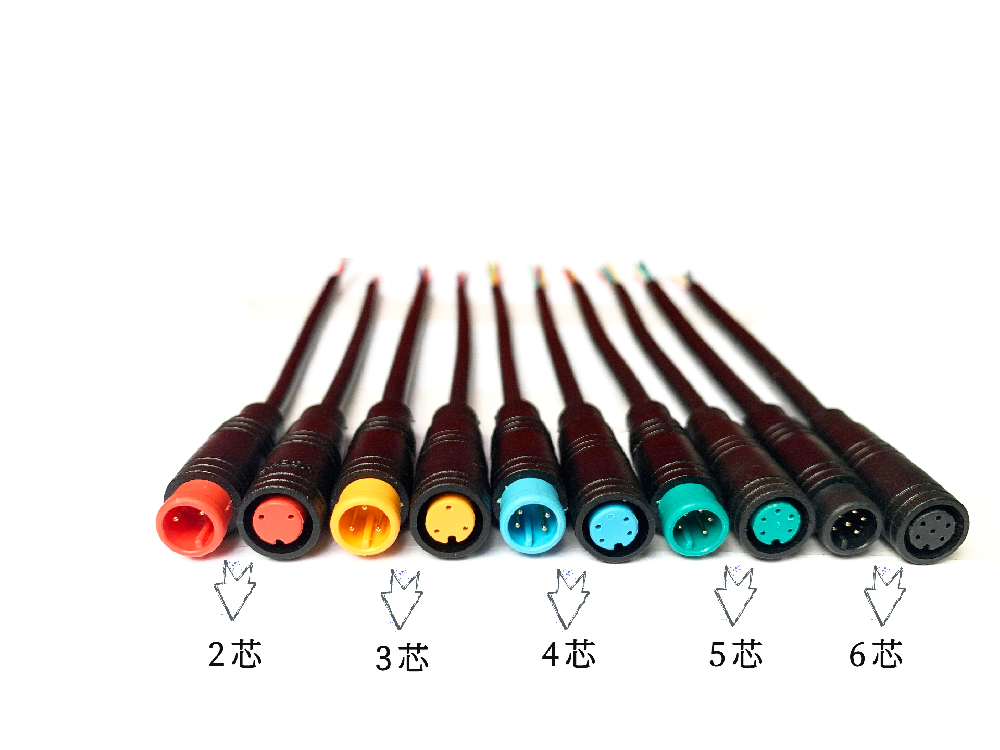
Number of contacts and pin arrangement
Rated voltage and current
Contact and housing materials
Compatible cable dimensions
Connection and locking method
Environmental protection information
Operating temperature range
Installation instructions
Not every manufacturer uses the same datasheet format. Some provide a short specification sheet, while others include detailed drawings and electrical performance information.
Buyers should review the complete documentation available for the exact product model.
Start by confirming the product identification information.
A connector series may include multiple versions with different contact counts, cable entries, mounting structures, or connection methods.
For example, products within the same circular connector family may have different:
Contact arrangements
Housing sizes
Male and female configurations
Cable or panel mounting options
Thread specifications
Cable diameter ranges
Do not assume that two products are interchangeable simply because they share a similar appearance or series name.
When requesting a quotation, provide the complete model number and configuration whenever possible.
Electrical ratings are among the most important sections of a connector datasheet.
Rated voltage indicates the voltage level specified for the connector under defined conditions.
Before selecting a connector, compare its rated voltage with the requirements of the electrical system.
Also consider the applicable standards, installation conditions, and equipment design requirements.
Rated current describes the current level specified for the connector under the manufacturer's stated conditions.
The actual suitability of a connector depends on factors such as conductor size, contact design, temperature, and operating conditions.
A connector with a higher rated current is not automatically suitable for every application. Review the complete electrical specifications.
Contact resistance describes the electrical resistance at the contact interface.
It can be an important factor in applications where stable electrical connections and power transmission are required.
When comparing products, check whether the manufacturer provides contact resistance values and the associated test conditions.
Insulation resistance and dielectric withstanding voltage are different electrical characteristics.
Insulation resistance relates to the resistance of insulating materials between conductive parts.
Dielectric withstanding voltage refers to a specified voltage test used to evaluate insulation performance under defined conditions.
Do not confuse these values with the connector's rated operating voltage.
Pin configuration determines how electrical contacts are arranged and connected.
A datasheet may include a front view, rear view, wiring diagram, or numbered contact layout.
Check the following details:
Number of contacts
Contact numbering
Male and female contact arrangement
Signal and power assignments
Keying or orientation features
Wiring sequence
Two connectors with the same number of contacts may use different pin arrangements.
Using an incorrect configuration can cause wiring errors, prevent equipment from operating correctly, or create electrical compatibility problems.
For OEM projects, provide the wiring diagram or pin assignment requirements when requesting connector samples.
Material information helps buyers evaluate whether a connector is suitable for its intended operating environment.
Depending on the product design, connector housings may use engineering plastics or metal materials.
Relevant considerations include:
Mechanical requirements
Weight limitations
Environmental exposure
Electrical insulation requirements
Surface treatment and finish
The datasheet may identify the contact base material and surface plating.
These details can influence electrical contact characteristics and suitability for different applications.
Buyers should confirm the actual material specifications rather than relying on general descriptions such as premium metal or high-quality contacts.
Cable compatibility is a common source of connector selection errors.
The datasheet may specify an acceptable cable outer diameter, conductor size, or cable entry range.
Review these details before ordering.
The cable outer diameter must match the connector's specified sealing or cable entry range.
An incompatible cable size may affect assembly and sealing performance.
Check whether the connector contacts support the required conductor size.
The correct termination method and conductor preparation dimensions should also be confirmed.
Consider cable flexibility, insulation material, and environmental suitability.
The cable and connector should be evaluated as part of the complete electrical assembly.
Waterproof connectors are used in many environments, but the conditions they can support vary by product.
If a datasheet lists an IP rating, review the exact rating and its supporting test information.
Do not assume that all products in the same connector series have identical protection ratings.
Also confirm whether the rating applies to a mated connector pair, a particular assembly configuration, or another specified test condition.
The operating temperature range indicates the temperatures within which the manufacturer specifies that the connector can be used.
Compare this range with the expected conditions of the installation.
Consider both ambient temperature and possible temperature increases caused by nearby equipment or electrical loading.
Check the connector's coupling or locking design.
Common designs may include threaded coupling, bayonet-style structures, push-lock mechanisms, or other product-specific arrangements.
The connection method should be compatible with installation space, maintenance access, and equipment design.
Use the product drawing to confirm dimensions before designing an enclosure or mounting interface.
Important dimensions may include:
Overall length
Housing diameter
Thread size
Panel cutout dimensions
Cable entry dimensions
Mating interface dimensions
For custom equipment, dimensional drawings should be reviewed before tooling or production begins.
Before approving a connector for a project, use the following checklist.
| Specification | What to Confirm |
|---|---|
| Product model | Exact series and configuration |
| Contact count | Required number of electrical contacts |
| Pin arrangement | Correct wiring and contact positions |
| Rated voltage | Compatible with system requirements |
| Rated current | Suitable for expected electrical load |
| Contact resistance | Value and test conditions, if provided |
| Insulation properties | Relevant insulation specifications |
| Housing material | Suitable for the application |
| Contact material | Confirm material and plating details |
| Cable compatibility | Outer diameter and conductor size |
| IP rating | Exact rating and test configuration |
| Temperature range | Suitable operating conditions |
| Mechanical dimensions | Compatible with equipment design |
| Connection method | Suitable locking and mating structure |
This checklist can also be used when comparing quotations from multiple suppliers.
An IP rating is important, but it does not describe every aspect of connector performance.
Electrical ratings, mechanical dimensions, materials, and cable compatibility must also be checked.
A connector with the correct contact count may still have an incompatible pin arrangement.
Always verify the wiring diagram.
The cable must fit the connector's specified cable entry and termination requirements.
Confirm cable dimensions before ordering samples.
Products within the same series may have different dimensions or mounting configurations.
Use the drawing for the exact model being purchased.
A product family may include multiple versions with different ratings and construction details.
Request model-specific documentation when necessary.
A datasheet provides the technical information needed for product evaluation, but some projects also require additional clarification.
For example, OEM customers may need to confirm a specific pin arrangement, cable length, mounting structure, housing material, or product configuration.
YCZXF provides waterproof connector solutions for industrial and electrical applications. When discussing a project, buyers can share their application details, cable requirements, electrical specifications, and drawings to help identify suitable product options.
For accurate product selection, always compare the exact model specifications and confirm any application-specific requirements with the manufacturer.
Start with the model number, contact configuration, electrical ratings, cable compatibility, dimensions, and environmental specifications.
No. The connector should match the electrical requirements of the application. Contact design, conductor size, temperature, and operating conditions also matter.
Pin diagrams show contact positions and numbering. They help prevent wiring errors and ensure compatibility with the equipment.
It is better to use the drawing for the exact model. Similar-looking connectors may have different thread sizes, housing dimensions, or mating interfaces.
Provide the application, required contact count, electrical requirements, cable dimensions, mounting method, environmental conditions, and any available drawings or wiring diagrams.
Need help evaluating waterproof connector specifications for an industrial or OEM project?
Contact YCZXF with your product requirements, drawings, or technical questions. Our team can help review available connector configurations and identify product options for your application.
 Returns a list
 0755-28471633